7 hr
DMZ Insider Tour with North Korean Defector Q&A and Suspension Bridge
Journey to the Korean DMZ, meet a defector in person, explore infiltration tunnels, and choose your bridge adventure
Reserve
Hand-picked by our editors — only the best 5 experiences from 47 reviewed.
Verified partners for every tour, free cancellation where available, and instant confirmation on every booking.
7 hr
Journey to the Korean DMZ, meet a defector in person, explore infiltration tunnels, and choose your bridge adventure
Reserve
7 hr
Journey to the Korean border for a fascinating look at history, war-era tunnels, and mountain views
Reserve
9 hr
Explore Korea's divided border with tunnel access, observatory views, and exclusive museum entry
ReservePrices from verified partners. Availability updates in real time at checkout. Free cancellation policies apply where shown.
The landmarks, rooms, and views travelers on this tour remember — all visible on a single visit.
This passage was discovered in 1978 and is capable of moving thousands of soldiers per hour. It represents one of the most tense defensive sites.
This site offers a panoramic view of North Korea, including the Kijong-dong propaganda village. Visitors use high-powered binoculars to see across the border.
This terminal remains the northernmost railway station in South Korea, acting as a symbol of hope for future unification. It is an active railway stop preserved for historical significance.
Originally part of the Gyeongui Line, this landmark marks the location where prisoners of war returned home in 1953. It remains a somber site of reflection.
Private tours provide deep, personal historical context, while standard bus excursions offer a logistical, efficient way to view the border area. A private dmz tour with north korean defector serves visitors seeking intimate storytelling, whereas the standard bus route is designed for broad, observation-focused discovery of these Korean landmarks.
| Feature | Top pick Defector-Led Private Tour | Standard Group Bus Tour |
|---|---|---|
Narrative Depth |
First-hand life accounts and historical analysis | |
Group Size |
1–6 people typically | |
Flexibility |
Customizable itinerary and pace | |
Access to Personal Insight |
Direct Q&A with defector guide | |
Personal Interaction |
High-engagement, conversational atmosphere | |
Total Cost |
Higher premium rate per group | |
| See tickets → |
Verdict: Choose the private dmz tour with north korean defector tours for specialized insights, or opt for the standard group bus if you prefer a structured, lower-cost approach to sightseeing at this military border.
Choose your ticket, select your date, and reserve in under two minutes. Secure checkout handled by our verified partner.
Instant confirmation by email, with a mobile voucher you can save offline. No printing, no queuing at a collection desk.
Arrive at the entrance, show your voucher on your phone, and walk in. Most tickets include priority or skip-the-line access.
Practical details for your visit straight from our verified partners — hours, access, rules, and how to get there.
50, Sicheong-ro, Paju-si
Main assembly area for tours
Follow Route 1 north toward Paju until reaching the designated parking area.
Take the Gyeongui-Jungang Line to Dorasan Station or local bus from Paju.
Avoid military-style clothing or camouflage attire, as this can cause confusion at checkpoints. Conservative, respectful clothing is recommended for this private dmz tour with north korean defector.
Strict security measures apply; all visitors must present valid passports to access restricted zones. Large bags are generally prohibited for a private dmz tour with north korean defector.
Photography is strictly regulated and only permitted in designated areas. Always follow your guide's instructions during your private dmz tour with north korean defector.
Some areas of the DMZ involve significant walking or uneven terrain. Contact your operator regarding specific mobility needs for a private dmz tour with north korean defector.
Mobile phone use is permitted, but signal may be unstable near the border. Silence your device during briefings on your private dmz tour with north korean defector.
This experience may be sensitive for young children due to the complex political history. Parents should assess suitability before booking a private dmz tour with north korean defector.
Food options are limited within the DMZ zone. It is advisable to eat before your private dmz tour with north korean defector.
Pets are strictly prohibited due to the sensitive nature of the border security zones. This applies to all private dmz tour with north korean defector trips.
Always maintain a professional demeanor toward military personnel. Your guide provides essential context throughout your private dmz tour with north korean defector.
Best time to go, insider tips, nearby landmarks, and the cancellation fine print — flip through to skim what matters to you.
How crowds, weather, and events shift across the year.
September to November offers crisp air and clear visibility for observing northern landmarks.
April to June features pleasant temperatures and blooming landscapes.
Expect high humidity and occasional rain, but the lush environment is striking.
Bitter cold persists, but crowds are thinner and the visibility can be sharp.
Small details that turn a good visit into a great one.
Tickets are limited and often sell out early in the day.
Non-bookable sights within a short walk — free to visit, easy to pair.
Features monuments and peaceful memorials commemorating the divided nation.
A symbolic structure dedicated to national reconciliation.
The historic site where thousands of soldiers returned home.
Flexible, no hidden fees.
Full refunds are available for cancellations made at least 7 days in advance. Bookings include the 12,200 KRW DMZ Peace Tour ticket per person.
Hand-picked options within walking distance — pick a district for vibe, or a specific hotel for convenience.
Convenient access to regional transit and the DMZ sites.
High-end lodging for those commuting from the capital.
Small, comfortable rooms near the city center.
The Korean Demilitarized Zone stretches 250 kilometres across the peninsula, a four-kilometre-wide buffer that has separated two nations since the 1953 armistice. Beneath its surface, the Third Infiltration Tunnel descends 73 metres, capable of moving 30,000 soldiers per hour when South Korean forces discovered it in 1978. North Korea initially claimed it was a coal mine, painting tunnel walls black to support the fiction. The deception failed. Today, visitors walk 435 metres into bedrock that was blasted by hand, a subterranean corridor that ends at a concrete barricade metres from the Military Demarcation Line. Private DMZ tour with north korean defector experiences offer access to voices the official narrative cannot provide. These guides crossed the border themselves, navigating minefields, rivers, and third-country routes that cost families everything. Their testimonies carry details no museum placard replicates: the texture of ration queues, the weight of propaganda internalized from childhood, the calculations behind escape. A defector-led tour reframes the landscape. The Dora Observatory, where tourists peer through binoculars at Kijong-dong's empty propaganda village, becomes a site of recognition rather than curiosity. The suspension bridge over the Imjin River, once a route south for refugees, transforms into a threshold with biographical gravity. Paju's DMZ Peace Tour infrastructure opened civilian access in phases starting 2009, balancing security protocols with educational demand. The JSA Museum archives armistice negotiations, uniform insignia, and intercepted tunnels, but the defector testimony tours layer lived experience onto geopolitical abstraction. Guides answer questions archives cannot: what North Korean children learn about the South, how black markets operate under state surveillance, why some escapees return despite the risks. These exchanges occur in minibuses between checkpoints, in briefing rooms before tunnel descents, beside observation platforms where the North's Kaesong Industrial Complex sits visible and dormant. The Gwangtan Suspension Bridge, a 220-metre pedestrian span above the Imjin, serves as both scenic waypoint and symbolic crossing. Defector guides note the irony: tourists walk freely over water that remains a fatal barrier for those attempting unsanctioned passage. The private dmz tour with north korean defector format ensures small groups, extended Q&A sessions, and itineraries adjusted for testimonial depth rather than photo efficiency. These are not museum visits with a human footnote. They are inversions—the landscape becomes context, the guide becomes text.
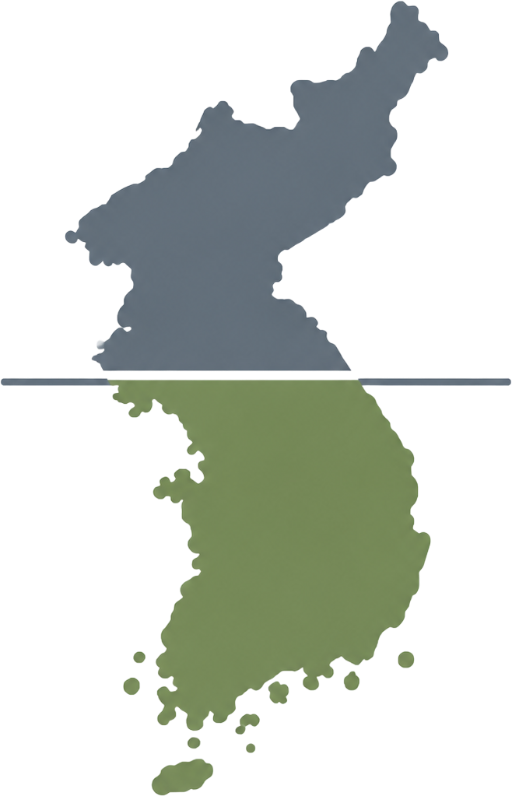
"The Third Infiltration Tunnel descends 73 metres, capable of moving 30,000 soldiers per hour when South Korean forces discovered it in 1978."
A step-by-step walkthrough of the visit — what you'll see, how long each stage takes, and the details that matter.
You meet your guide in Paju at 09:00, credentials checked twice before the convoy departs. The first stop is the Third Tunnel, where you descend via a 350-metre walkway sloped at eleven degrees. Helmets are mandatory; the ceiling drops to 1.6 metres in sections blasted through granite. Your guide pauses at the dynamite scorch marks, explaining how North Korean engineers misjudged the southern endpoint by several hundred metres. The tunnel ends at a barricade; beyond it, the North lies 170 metres distant. At Dora Observatory, you locate Kijong-dong through mounted binoculars, its 160-metre flagpole and empty apartment blocks visible across two kilometres of no-man's-land. Your guide identifies real details: the loudspeaker towers that broadcast propaganda until 2015, the farm cooperatives where workers appear and vanish on state schedules. Questions follow—about family left behind, about information access, about the cognitive dissonance of relearning a country you were taught to hate. The suspension bridge walk precedes lunch, the Imjin River brown and slow beneath your feet. Your guide recounts crossing a different river at night, the cold, the silence required. The anecdote is specific, unsanitized. You ask follow-up questions; the answers reshape your understanding of the morning's checkpoints and tunnels. The DMZ is no longer a curiosity. It is a wound, still open, guarded, and crossed by those who had no alternative.
The DMZ is open Tuesday to Sunday, 09:00–14:30, and is closed on Mondays.
A private dmz tour with north korean defector provides unique cultural insights that enhance your experience significantly.
Tickets are limited and often sell out early in the day, so booking a private dmz tour with north korean defector in advance is essential.
The entrance fee is 12,200 KRW (DMZ Peace Tour ticket, per person).
While not explicitly forbidden, a private dmz tour with north korean defector is best suited for those interested in complex political history.
You will be denied entry to the restricted zone without a valid passport for your private dmz tour with north korean defector.
Photography is allowed only in specific areas during your private dmz tour with north korean defector.
The address is 50, Sicheong-ro, Paju-si, Gyeonggi-do, Republic of Korea.
Food options are limited, so plan ahead before starting your private dmz tour with north korean defector.